Showing posts with label radio operation. Show all posts

Friday, June 8, 2012

Ham Radio: Simplified Review

Ham Radio: Simplified
Average Reviews:

(More customer reviews)
While others may find this book a 'waste of bookshelf space', I use this book daily as I learn new ham protocols and modes of operation. I find the ARRL tomes to be far to fat for practical use and hence a waste of my valuable space next to my rig. This book provides quick answers and understandable references. Simplified illustrations and explanations make this a perfect book for those of us who haven't tangled with the technical side before. I don't have time to wade through the other texts, but the clear and simple style in this book gave me just what I needed to get started. Sure it's simple, that's what the title says - and it is! Excellent!

Click Here to see more reviews about: Ham Radio: Simplified

A perfect gift or companion for Hams-to-be, new Hams, old Hams, young Hams, or just downrightconfused Hams. Lots of illustrations, definitions, and examples make hamming easy and fun. A greatlearning tool both before and after the exam. A non-technical guide on how to choose a radio, set upa station, put up an antenna, talk on the air for the first time, and how to use packet, Morse Code,SSTV, RTTY, and more. Whether you'd like to markedly improve your own skill level, or the skill levelof your students, this book will help you. Easy-to-understand, Ham Radio: Simplified was writtenexpressly for new or confused hams. It details basics often not covered in the classroom curriculumand clearly defines common practices and protocols the new ham will encounter when on-the-air. No-nonsense explanations help you grasp difficult concepts with greater ease. After reading this bookyou'll approach your exam or your radio with confidence and enthusiasm.

Buy Now

Click here for more information about Ham Radio: Simplified

Read More...

Monday, April 2, 2012

Build Your Own Low-Power Transmitters: Projects for the Electronics Experimenter Review

Build Your Own Low-Power Transmitters: Projects for the Electronics Experimenter
Average Reviews:

(More customer reviews)
This is a very disappointing book. The preface promises "All projects use standard parts and have been thoroughly tested, with PC board layouts given for most the projects, as well as parts lists, coil data, and complete setup information." However, the only time it delivers all this information is when the transmitter in question is a kit from a certain vendor in New York State. For everything else, the information supplied is minimal at best.
For instance, Chapter 16 (Low-Power Narrowband FM Transmitters) provides a schematic for a ? watt amateur 2 meter FM transmitter that completely omits data on all coils, inductors, etc. in the design. There's no parts list, no PC board layout, and minimal description of the circuit. The chapter goes on to describe a UHF transmitter based on an obsolete integrated circuit.
Now I can't fault the authors for including a design based on an obsolete chip. The chip was probably in full production when this chapter was written. However, omitting the coil data for the 2 meter transmitter is unacceptable.
Chapters describing the various transmitter kits are chock full of information. There's also some interesting chapters on FM stereo generation and serial data remote control. However, on a whole, the book leaves out a lot of detail on the transmitters I bought it for. I would have been better off looking for a suitable ARRL publication.

Click Here to see more reviews about: Build Your Own Low-Power Transmitters: Projects for the Electronics Experimenter

Rudolf Graf and William Sheets have written a book containing twenty low-power (LP) transmitter projects, perfect for the electronics hobbyist and radio experimenter. Now that the FCC has changed its regulations about "pirate" transmissions, more and more people are setting up radio and video stations for broadcast from their homes. Build Your Own Low-Power Transmitters addresses applications for hobbyist broadcasting of AM, SSB, TV, FM Stereo and NBFM VHF-UHF signals with equipment the reader can build himself for thousands of dollars less than similar equipment sold on the retail market. The authors also fully explore the legal limits and ramifications of using the equipment as well as how to get the best performance for optimum range. The key advantage is referencing a low-cost source for all needed parts, including the printed circuit board, as well as the kit.Projects in the book include: LP FM stereo transmitter; digitally synthesized PLL FM stereo transmitter; LP AM transmitter for 150-1710 KHz; radio control transmitter/receiver; carrier current transmitter and AM and FM receivers; LP VHF one-way and two-way audio links; 1-watt 40-meter CW transmitter for ham radio use; SSB LP transmitter for 10-meter ham radio use; 2-meter VHF FM ham radio transmitter; FM video link for 900 MHz NTSC/PAL operation; 2-watt TV transmitters for 440, 900 and 1300 MHz amateur TV NTSC/PAL transmissions; linear amplifier for 440MHz, 10-15watt NTSC/PAL operation; Downconverters for 440, 900 and 1300 MHz with VHF channel 3 or 4 output; TV video receiving systems and AM-FM IF systems; LP video link for UHF channels 14-18; 1-watt CW beacon transmitter for Part 15 LF radio experimentation; CW identifier for transmitters; test equipment projects for LP transmitters; as well as an RF power meter and modulation monitor. Complete source information will be included to help each reader find the kits and parts they need to build these fascinating projects. Unique among comparable project books, this one offers a low-cost source for all parts, including the printed circuit board. This allows immediate completion without needing to search for difficult to find partsFeatures twenty low-power transmitter projects

Buy NowGet 33% OFF

Click here for more information about Build Your Own Low-Power Transmitters: Projects for the Electronics Experimenter

Read More...

Sunday, March 4, 2012

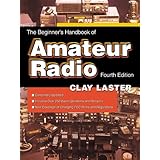
The Beginner's Handbook of Amateur Radio Review

The Beginner's Handbook of Amateur Radio
Average Reviews:

(More customer reviews)
To challenge myself, I decided to study in order to take the Technician amateur radio operating license exam. I picked up this book, which bills itself as a complete source of information. Not so.
Despite the fact that the book is in its 4th edition, it is poorly edited. Information jumps from basic to full jargon in the same paragraph, without any definition of the new terms used. Much of the information on the basics of electric circuits and electronics seems to be pulled from an electronics text.
I'm an engineer, but not an electrical engineer. It's been years since I studied electric circuits and this book did little to refresh my memory. The information on FCC regs is sparse -- the complete Part 97 is not included. The question pool for the multiple choice Tech exam is included, but only the letter answers are provided without any explanation of the answers (leaving the reader to try to find the information in the rest of the book).
I'll look to another source to help prepare for the exam.

Click Here to see more reviews about: The Beginner's Handbook of Amateur Radio

Essential A-to-Z Ham Radio Guide
The revised edition of the most trusted guide in ham radio is here just in time to help you pass the new No-Code Technician Class exams! Used by thousands of ham operators to set up their first shortwave transmitters and to get their licenses, Clay Laster's Beginner's Handbook of Amateur Radio, Fourth Edition delivers all the guidance you need -- from radio and electronics fundamentals needed to set up a transmitter to the newest equipment to revisions to the Federal Communications Commission rules and tests. If you want to communicate over the airwaves both locally and globally and listen in on conversations heard by very few, take this book home, and it will take you into the realm of communication, new friends, good times, and technical mastery beyond your dreams.
You get: Understandable instruction in wave propagation, power supplies, and electronic circuits Complete study guide for getting your Novice Operator or No-Code Technician Class licenses Study hints for preparing for FCC exams Shortwave operator's do's-and-don't's, practices and procedures Appendix packed with 250 sample examination questions and answers

Buy Now

Click here for more information about The Beginner's Handbook of Amateur Radio

Read More...

Saturday, February 18, 2012

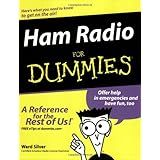
Ham Radio For Dummies Review

Ham Radio For Dummies
Average Reviews:

(More customer reviews)
I am often asked why I am still interested in ham radio when it is so easy for people to communicate by e-mail and cellular phone. The answer, as is so forcefully brought home in this excellent book, is that ham radio is fun, challenging, rewarding, and provides opportunities for personal growth.
While the major objective of the book is to provide information to get newcomers into the hobby and to help get them productive and successful, there is something here that can be useful to even the most experienced operators. There are many ways people have found to enjoy the various technical, recreational, educational, and social aspects of ham radio. They are covered in this well-written book.
Ward is an operator of the first caliber. His advice is based upon personal experience, not based upon interpreting what some others person has told him. He is also a very funny person and he has a unique ability to find whatever humor exists in a situation. Therefore the tone of his book is light and eminently readable. More particularly, it does not suffer from the dry style that I found in similar books.
People who are interested in developing new skills, expanding their minds, and building relationships will find ham radio a great hobby. I recommend this book as a means of becoming successful quickly. Experienced hams will find hints that are more valuable than the modest cost of the book. Finally, those like me who were away from the hobby for a while will find a good summary of what they have missed while they were away.
A terrific read.

Click Here to see more reviews about: Ham Radio For Dummies

It's time we cleared the air about ham radio. If you think of it as staticky transmissions sent by people in the middle of nowhere, think again. Today's ham radio goes beyond wireless to extreme wireless, Operators transmit data and pictures, use the Internet, laser, and microwave transmitters, and travel to places high and low to make contact. In an emergency or natural disaster, ham radio can replace downed traditional communication and save lives. Whether you're just getting turned on to ham radio or already have your license, Ham Radio for Dummies helps you with the terminology, the technology and the talknology. You discover how to:
Decipher the jargon and speak the language
Buy or upgrade your equipment, including the all-important antennas
Build a ham radio shack, complete with the rig, a computer, mobile/base rig, microphones, keys, headphones, antennas, cables and feedlines
Study for your license, master Morse code, take the test and get your call sign
Understand the basics of ragchews (conversations), nets (organized on-air meetings) and DX-ing (competing in contacts to make contacts)
Keeping logs with the vital statistics, including time (in UTC or World Time), frequency, and call sign

Written by Ward Silver, an electrical engineer, Certified Amateur Radio License Examiner, and columnist for QST, a monthly magazine for ham operators, Ham Radio for Dummies gives you the info you need to delve into the science or dive into the conversation. It explains how you can:
Tune in to the most common types of signals, including Morse Code (CW), single-sideband (SSB), FM, Radioteletype (RTTY), and data signals
Break in, introduce yourself, converse, and say or signal goodbye
Communicate while traveling (ham radio goes where mobile phones go dead)
Register with an emergency organization such as ARES and RACES
Help in emergencies such as earthquakes, wildfires, or severe weather
Pursue your special interests, including contacting distant stations, participating in contests, exploring the digital modes, using satellites, transmitting images, and more

Complete with a glossary and ten pages of additional suggested resources, Ham Radio for Dummies encourages you to touch that dial and take that mike.
CUL. (That's Morse Code for "see you later.”)

Buy NowGet 32% OFF

Click here for more information about Ham Radio For Dummies

Read More...

Wednesday, January 25, 2012

Pirate Radio and Video: Experimental Transmitter Projects (Electronic Circuit Investigator Series) Review

Pirate Radio and Video: Experimental Transmitter Projects (Electronic Circuit Investigator Series)
Average Reviews:

(More customer reviews)
Sorry, but if you want to broadcast for more than a few feet, this book is not for you. This book is a collection of low-powered simple circuits, backed with high-powered marketing. The back cover states, "Now that the FCC has changed the laws governing pirate radio and video stations...." While there is now a low-power FM service, for which a type-accepted transmitter and license are still required, there have been no "changes" governing pirate broadcasting. It's still illegal (and fun). And there is nothing in this book that is going to save you "thousands of dollars" over commercial equipment, while giving you the same power and performance. These statements are clearly misleading and get your hopes up (and your wallets out) for something this book is not. It's unfortunate that the author, who is probably capable of doing so, did not write a book to match the promised content.

Click Here to see more reviews about: Pirate Radio and Video: Experimental Transmitter Projects (Electronic Circuit Investigator Series)

Now that the FCC has changed the laws governing pirate radio and video stations, more and more people across the country are starting broadcasts from their homes. Of course transmitting equipment is very expensive, but now you can build your own transmitters for a fraction of the cost of purchasing. By reading about and building the over thirty projects in Pirate Radio and Video, you can construct your own station with a minimum investment for maximum learning. With projects for UHF, VHF, AM and FM transmitters, this book covers the gamut of popular bands and outputs. Not only will you learn how to build your own transmitters, but also how to troubleshoot problems, test outcomes and even synthesize several types of equipment into a powerful and unique system.Written with the electronics hobbyist in mind, each project includes basic diagrams, complete instructions as well as advice on how to make each project work best for you. The list of projects includes over several different FM radio transmitters, AM radio transmitters, microwave transmitters, shortwave transmitters, UHF video transmitters, VHF video transmitters as well as nearly a dozen special projects for test equipment and system set-ups. If you are interested in setting up your own radio or television broadcasting system, you will need a copy of this book to do it! Learn how to build your own UHF, VHF, AM and FM transmitters, saving thousands of dollars over buying equipment at a specialty storeStart broadcasting your own video or radio signals from your self-built stationExperience the fun and learning that radio and video production and broadcasting gives the whole family

Buy NowGet 33% OFF

Click here for more information about Pirate Radio and Video: Experimental Transmitter Projects (Electronic Circuit Investigator Series)

Read More...

Saturday, December 24, 2011

Passport to World Band Radio 1997 (Serial) Review

Passport to World Band Radio 1997 (Serial)
Average Reviews:

(More customer reviews)
(The numerical rating above is a default settingwithin Amazon's format. This reviewer does notemploy numerical ratings.)
Whether your shortwave interest is home news from Ireland, Nigerian music, clandestine political movements, or just plain curiosity about the rest of the world, this is the only guide you need.
Written in understandable English with the beginner in mind, the Passport will be useful to the advanced listener as well, with up-to-date listings for the most exotic stations and their addresses, equipment tips and recommendations, advice on recording programs, a channel-by-channel guide, and much more. A new and special feature is the guide to Web Radio, where you can listen to the world right through your computer.
With this guide and a modest shortwave receiver, you're off to great listening adventures.

Click Here to see more reviews about: Passport to World Band Radio 1997 (Serial)

The best-selling guide to international shortwave radio focuses on the news, sports, and entertainment opportunities from hundreds of stations, including award-winning ratings of world band radios and helpful "how-to" articles by leading experts. Original. IP.

Buy Now

Click here for more information about Passport to World Band Radio 1997 (Serial)

Read More...

Wednesday, September 7, 2011

Now You're Talking All You Need to Get Your First Amateur Radio License, Fifth Edition Review

Now You're Talking All You Need to Get Your First Amateur Radio License, Fifth Edition
Average Reviews:

(More customer reviews)
This book is exactly right for someone who wants to become a ham radio operator. This book does two things. It is a self study course that will allow you to pass the Technician level FCC test. It is also a general introduction to all of ham radio, covering the highlights of all that can be done in amateur radio. It has just the right level of sophistication to give a good understanding of all facets of amateur radio but does not get into such extreme detail that it is overwhelming. The technical level is just right as well.
I used an earlier version of this text to study for my amateur radio license (KD4TTC). Even though I studied for the Technician license I was able to pass the written portion of the test for the General license class. However, to get to know Morse code, needed for working the frequencies that will get around the whole globe, you will need to find a way to practice receiving Morse code. While this book won't teach you Morse, you will learn from the book how to go about learning it if you want to. (As an aside, I was not interested in international communications back then, so I skipped that aspect of the hobby. I will be learning Morse this year and will upgrade. There is plenty to do with amateur radio without Morse code, so don't let any disinterest or fear of Morse stop you from becomming a Ham. The book explains all this).
I have not yet come across any aspect of ham radio that was not described at least in overview in this book. I may not know details of lots of aspects of all that is ham radio, but I have not come across anything in Ham radio that I was not introduced to in this book.
You can expect that after reading this book you will be able to pass the Technician license exam, you might even be able to pass the General license written portion, you will have learned how to learn Morse, you will be able to decide what equipment you will need and where to find it, you will be able to set up your station and safely operate it, you will know correct and responsible operating procedures, and you will learn about all the different types of communications you can do so you will pick the most enjoyable aspects of the hobby for yourself.
I have given this book to friends so they can become hams. It works well for that purpose. I came here to buy a copy for yet another potential ham and found myself writing this long review. I am not really that avid of an amateur operator, but I am really enthusiastic about this book because it was such a fun and painless way to learn what I needed to know to get into ham radio.
Buy the book.

Click Here to see more reviews about: Now You're Talking All You Need to Get Your First Amateur Radio License, Fifth Edition


Buy Now

Click here for more information about Now You're Talking All You Need to Get Your First Amateur Radio License, Fifth Edition

Read More...

Saturday, June 25, 2011

Morse Code: Breaking the Barrier Review

Morse Code: Breaking the Barrier
Average Reviews:

(More customer reviews)
I found the book very useful in terms of advice and guidance, however there is no actual help in learning the code in the book.
To make this statement clearer, this book serves as an introduction to the method of learning by Koch which seems to cover about 1 1/2 chapters. The rest is spent reviewing Morse history and praising the method, along with a lot of stuff about morse keyers and techniques / watchpoints once the code is learned.
I found it to be a useful book, and I'm glad I bought it - but disappointing and not what I expected from the title and the intro on Amazon pages. Also, I live in Hong Kong and the mentioned support, equipment etc is much harder [read 'impossible'] to find here, than it *probably* is in the US!
Do buy it, there's a lot of good stuff, but beware that it's only a guide to the Koch method and it gets you started on the right path rather than actually teaches any code. Don't expect too much!
Cheers!

Click Here to see more reviews about: Morse Code: Breaking the Barrier


Buy Now

Click here for more information about Morse Code: Breaking the Barrier

Read More...